
As industries around the world look for more sustainable and high-performance construction materials, alkali-activated geopolymer technology has become a practical solution across multiple sectors. From infrastructure to mining and manufacturing, geopolymer materials are helping businesses reduce environmental impact while improving durability and chemical resistance.
The performance of any geopolymer system depends on selecting the right alkaline activator geopolymer formulation. These activators initiate the chemical reaction that transforms aluminosilicate materials into a durable binder capable of replacing conventional cement in many applications.
In this article, we’ll explore ten industries that are increasingly adopting geopolymer technology, understand why it is gaining popularity, and learn how manufacturers like Noble Alchem contribute to reliable geopolymer solutions.
Why Are Industries Moving Towards Geopolymer Technology?
Traditional Portland cement production contributes significantly to global carbon emissions. At the same time, industries require materials that offer longer service life, improved chemical resistance, and reduced maintenance costs.
Modern geopolymer systems provide:
- Lower carbon footprint
- Excellent mechanical strength
- Superior resistance to chemicals
- High thermal stability
- Better durability in harsh environments
The effectiveness of these systems largely depends on carefully selected alkali activators geopolymer concrete, which enable the geopolymerisation process and determine the final material properties.
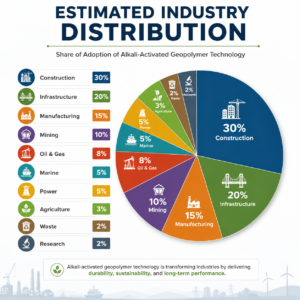
1. Construction and Infrastructure
Construction remains the largest adopter of geopolymer technology. Highways, commercial buildings, industrial flooring, bridges, and precast structures increasingly utilise geopolymer concrete due to its long-term durability.
Benefits include:
- Reduced shrinkage
- Improved compressive strength
- Better sulphate resistance
- Longer structural life

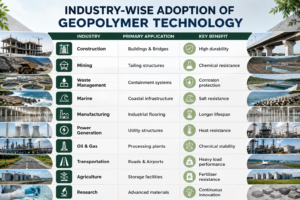
2. Mining Industry
Mining operations expose concrete structures to aggressive chemicals and abrasive conditions.
Geopolymer materials are widely used for:
- Tailing dams
- Underground support systems
- Protective linings
- Processing plant foundations
Their chemical stability significantly reduces maintenance costs over time.
3. Waste Management Facilities
Waste treatment plants require materials capable of resisting corrosive environments created by industrial chemicals and waste products.
Geopolymer technology is suitable for:
- Containment structures
- Hazardous waste storage
- Wastewater treatment tanks
- Protective barriers
Its chemical resistance helps increase operational reliability.
4. Marine and Coastal Structures
Saltwater rapidly deteriorates conventional concrete.
Marine industries increasingly use geopolymer materials for:
- Ports
- Jetties
- Seawalls
- Offshore foundations
- Coastal defence structures
Their superior chloride resistance extends service life in aggressive marine environments.
5. Industrial Manufacturing Plants
Factories operating under high temperatures and chemical exposure benefit from geopolymer-based construction materials.
Common applications include:
- Factory flooring
- Chemical processing units
- Equipment foundations
- Storage facilities
Durability helps reduce downtime caused by structural repairs.
6. Power Generation Industry
Power plants require construction materials capable of handling continuous thermal cycles.
Geopolymer materials are commonly used in:
- Fly ash utilisation projects
- Thermal insulation systems
- Chimney structures
- Utility buildings
These applications also promote recycling of industrial by-products.
7. Oil and Gas Industry
Oil refineries and petrochemical plants expose concrete to aggressive chemicals, oils, and extreme temperatures.
Geopolymer technology supports:
- Secondary containment
- Industrial flooring
- Chemical storage zones
- Pipeline support foundations
This improves safety while lowering maintenance frequency.
8. Transportation Infrastructure
Roads, airports, railway stations, and metro systems increasingly incorporate geopolymer concrete.
Applications include:
- Airport pavements
- Railway sleepers
- Tunnel linings
- Road barriers
- Transit stations
The enhanced strength helps support heavy traffic loads over extended periods.
9. Agricultural Infrastructure
Agriculture requires durable construction materials for storage and processing facilities.
Geopolymer technology is suitable for:
- Grain silos
- Fertiliser storage
- Livestock facilities
- Irrigation infrastructure
Its chemical resistance helps withstand exposure to fertilisers and agricultural chemicals.
10. Research and Advanced Manufacturing
Universities, R&D laboratories, and advanced manufacturing facilities continue exploring new geopolymer formulations for specialised engineering applications.
Research focuses on:
- 3D printed construction
- Fire-resistant panels
- Sustainable building materials
- Advanced composite systems
This ongoing innovation continues expanding commercial opportunities across industries.
Why Choose Noble Alchem?
With decades of expertise in silicate chemistry, Noble Alchem provides high-quality solutions that support modern geopolymer applications across multiple industries. The company focuses on consistent product quality, technical expertise, and reliable manufacturing processes, helping customers develop durable and sustainable construction materials.
If you’re exploring geopolymer solutions, learn more about our alkaline activator geopolymer products here:
Conclusion
The growing adoption of geopolymer technology demonstrates a clear shift toward sustainable, high-performance construction materials. From infrastructure and mining to transportation and industrial manufacturing, organisations are increasingly recognising the long-term value of geopolymer systems.
Selecting the right activator plays a crucial role in achieving optimal performance. As research continues and industries demand greener alternatives, geopolymer technology is expected to become an even more important part of future construction and manufacturing practices.
Frequently Asked Questions
1. What is an alkaline activator in geopolymer technology?
An alkaline activator is a chemical solution that initiates the geopolymerisation process by reacting with aluminosilicate materials, creating a durable binder suitable for construction and industrial applications.
2. Why are alkali activators important for geopolymer concrete?
They control the chemical reaction responsible for strength development, durability, setting time, and long-term performance of geopolymer concrete. Choosing the appropriate activator is essential for achieving consistent results.
3. Which industries benefit the most from geopolymer technology?
Construction, mining, transportation, marine engineering, power generation, oil and gas, manufacturing, agriculture, waste management, and research sectors all benefit from the durability and sustainability offered by geopolymer materials.
4. How does geopolymer technology support sustainability?
Geopolymer materials can utilise industrial by-products such as fly ash and slag, reducing waste while lowering carbon emissions compared to traditional Portland cement-based systems.
5. When should businesses consider switching to geopolymer materials?
Businesses should evaluate geopolymer solutions when projects require enhanced chemical resistance, improved thermal stability, longer service life, or a lower environmental footprint. Consulting experienced manufacturers like Noble Alchem can help determine the most suitable formulation for specific applications.