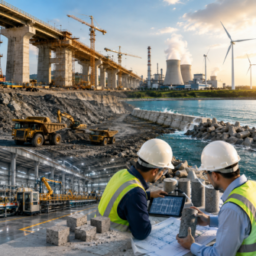
Geopolymer concrete is transforming sustainable construction by reducing reliance on traditional Portland cement and lowering carbon emissions. Powered by an alkaline activator geopolymer system, it delivers high strength, durability, and long-term performance while supporting net-zero construction goals. This blog explores how alkali activators geopolymer concrete technology is helping build greener, more resilient infrastructure for the future.
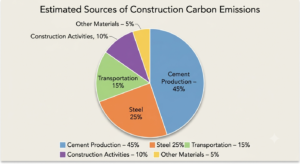
Buildings and infrastructure account for a substantial share of global greenhouse gas emissions. Much of this impact comes from the production of cement, steel, transportation of materials, and energy consumption throughout a building’s life cycle.
Net-zero construction aims to minimize these emissions by:
- Reducing embodied carbon in building materials
- Improving energy efficiency
- Using recycled and industrial by-product materials
- Extending the lifespan of structures
- Supporting circular economy practices
As sustainability standards become more stringent, selecting innovative construction materials is no longer optional it is becoming a strategic necessity.
Understanding Geopolymer Concrete
Unlike conventional concrete, geopolymer concrete does not rely primarily on Portland cement as its binder.
Instead, it uses aluminosilicate-rich materials such as:
- Fly ash
- Ground Granulated Blast Furnace Slag (GGBS)
- Metakaolin
- Other industrial mineral resources
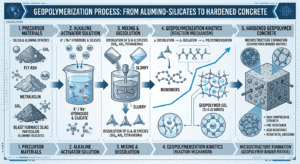
These materials react with an alkaline activator geopolymer solution to form a strong polymeric binder through geopolymerization rather than traditional cement hydration.
The result is a high-performance concrete capable of offering excellent strength, durability, and environmental benefits.
How Does an Alkaline Activator Geopolymer System Work?
The success of geopolymer technology depends on carefully formulated alkaline activators.
These activators initiate the chemical reaction that dissolves silica and alumina present in precursor materials. The dissolved compounds then reorganize into a three-dimensional network, creating a durable binder that replaces conventional cement paste.
Well-designed systems improve:
- Early strength development
- Long-term durability
- Chemical resistance
- Thermal stability
- Dimensional stability
Without an effective alkaline activator, geopolymerization cannot occur efficiently, making this component one of the most critical elements of geopolymer technology.
How Alkali Activators Improve Geopolymer Concrete Performance?
Modern alkali activators geopolymer concrete systems deliver multiple engineering advantages.
Higher Durability
Geopolymer concrete demonstrates excellent resistance against:
- Sulfate attack
- Chloride penetration
- Acidic environments
- Abrasion
- Freeze-thaw cycles
This contributes to longer-lasting structures with reduced maintenance requirements.
Lower Carbon Footprint
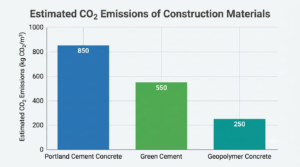
Replacing or significantly reducing Portland cement helps lower embodied carbon and supports sustainable construction objectives.
Better Resource Utilization
Industrial by-products that might otherwise become waste can be transformed into valuable construction materials, supporting circular economy initiatives.
Improved Long-Term Performance
The dense microstructure produced during geopolymerization often enhances durability and structural integrity under demanding service conditions.
How Noble Alchem Supports Sustainable Construction?
At Noble Alchem, we understand that sustainable construction requires more than innovative ideas it requires reliable chemistry.
Our focus on advanced chemical solutions enables manufacturers and researchers to develop high-performance geopolymer systems with consistent quality and dependable performance.
By supporting industries working toward low-carbon materials, Noble Alchem contributes to the growing adoption of sustainable construction technologies across infrastructure, precast manufacturing, industrial flooring, and specialized concrete applications.
Where Geopolymer Concrete Is Making an Impact?
The adoption of geopolymer concrete continues to grow across several sectors:
- Transportation infrastructure
- Bridges
- Industrial flooring
- Marine structures
- Underground construction
- Precast concrete products
- Commercial buildings
- Wastewater treatment facilities
These applications benefit from enhanced durability and reduced environmental impact.
Challenges to Wider Adoption
Although geopolymer concrete offers significant advantages, wider implementation depends on several factors:
- Industry awareness
- Standardization
- Material availability
- Regional regulations
- Skilled mix design
- Project-specific performance validation
Ongoing research and collaboration between manufacturers, engineers, and construction professionals continue to address these challenges.
Why the Future Looks Promising?
The transition toward sustainable infrastructure is accelerating worldwide.
Increasing investment in green construction, stricter environmental regulations, and demand for lower-carbon building materials are creating new opportunities for geopolymer technology.
As innovation continues, alkaline activation systems are expected to become even more efficient, scalable, and commercially viable.
For companies pursuing ESG objectives and net-zero commitments, geopolymer concrete represents a practical pathway toward more sustainable construction.
Frequently Asked Questions
1. What is an alkaline activator in geopolymer technology?
An alkaline activator is a chemical solution used to initiate the geopolymerization process. It dissolves silica and alumina from precursor materials such as fly ash or GGBS, enabling them to form a durable binder. Without this reaction, geopolymer concrete cannot develop the strength and performance expected from modern construction materials.
2. Why is geopolymer concrete considered more sustainable than conventional concrete?
Geopolymer concrete typically reduces reliance on Portland cement and makes greater use of industrial by-products. This approach can lower embodied carbon, conserve natural resources, and support circular economy principles while delivering excellent mechanical and durability properties.
3. Where is geopolymer concrete commonly used?
It is used in transportation infrastructure, precast products, industrial flooring, marine structures, wastewater facilities, retaining walls, bridges, and commercial developments where durability and sustainability are important design considerations.
4. Does geopolymer concrete perform well in aggressive environments?
Yes. Properly designed geopolymer concrete often demonstrates strong resistance to sulfate attack, chloride ingress, acids, elevated temperatures, and abrasion. These characteristics make it suitable for demanding industrial and infrastructure applications.
5. How does Noble Alchem contribute to geopolymer technology?
Noble Alchem supports industries with advanced chemical expertise and high-quality solutions that help manufacturers and researchers develop reliable geopolymer systems. By focusing on quality, consistency, and innovation, the company contributes to the advancement of sustainable construction materials.