
Why Are Horticultural Growers Looking More Closely at Silicon?
Horticulture is a balancing act.
A crop may have sufficient water and sunlight yet still struggle when it faces heat, salinity, disease pressure, nutrient imbalance or sudden environmental changes. This is one reason growers are increasingly interested in plant-support inputs that do more than simply supply a conventional nutrient.
One of those inputs is potassium silicate.
Potassium silicate supplies potassium and soluble silicon. Potassium has well-established roles in plant growth, water regulation and physiological processes, while silicon has been studied for its potential to strengthen plant tissues and improve tolerance to several biotic and abiotic stresses.
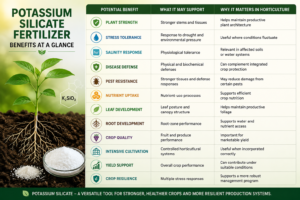
Research across different crops has reported responses such as improved stress tolerance, stronger plant structure, changes in nutrient uptake and reduced severity of some diseases. However, the response is not identical in every crop or under every application method. The crop, dose, growing medium, environmental conditions and method of application all matter.
For horticultural growers, the more useful question is therefore not simply “Is silicon good for plants?”
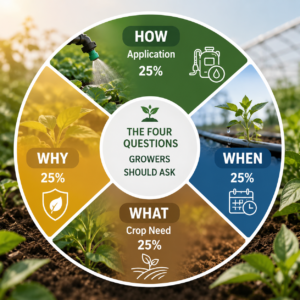
The better questions are:
- How can silicon support a crop?
- When can it be useful?
- Why does the plant respond to it?
- Which horticultural situations may benefit?
- How should growers evaluate a potassium silicate product?
This guide explores 8 practical ways potassium silicate liquid fertilizer may support horticultural crops, while also explaining where expectations should be realistic.
What Is Potassium Silicate Liquid Fertilizer?
Potassium silicate is a soluble silicate compound that provides potassium and silicon. In agriculture, soluble silicates can be incorporated into crop nutrition programs through appropriate application methods.
The importance of the silicon component comes from the way plants interact with available silicon. Once taken up, silicon can accumulate in plant tissues and contribute to physical and biochemical defense mechanisms.
Research reviews have associated silicon nutrition with improved responses to environmental stresses, including drought, salinity and certain disease pressures. In some horticultural crops, potassium silicate has also been investigated for its effect on plant defense and pest damage.
1. It Can Help Strengthen Plant Structure
One of the most discussed benefits of silicon nutrition is its relationship with plant structure.
Silicon can accumulate in plant tissues and contribute to the formation of stronger, more rigid structures. This may help leaves and stems maintain their position and improve the physical resilience of plants.
For horticultural crops carrying flowers or fruits, structural strength can be particularly valuable. A stronger plant architecture can help the crop maintain better canopy positioning rather than allowing stems and leaves to become excessively weak.
This does not mean silicon should be viewed as a replacement for potassium, calcium or other essential nutrients. Instead, it can be considered part of a broader crop nutrition strategy.
How does this matter in the field?
A well-supported plant canopy can intercept light efficiently, maintain productive leaves and better tolerate mechanical or environmental stress.
Research reviews have reported improvements in biomass and nutrient uptake in some crops receiving silicon fertilizers under water-stress conditions.
2. It May Improve Tolerance to Water Stress
Water availability is one of the biggest variables affecting horticultural production.
Periods of drought or irregular irrigation can cause plants to close stomata, reduce photosynthesis and redirect energy toward survival. Silicon has been studied for its role in helping plants respond to water-related stress.
Research involving grasses treated with silicon fertilizers reported improvements in biomass production and nutrient uptake under water-stress conditions.
The exact response varies from crop to crop, but the broader principle is important: silicon nutrition may help plants cope better with environmental pressure rather than simply promoting growth under ideal conditions.
When can this be particularly relevant?
Silicon-based nutrition may be worth considering in horticultural systems where crops regularly encounter:
- irregular irrigation
- high temperatures
- limited water availability
- container or protected cultivation
- periods of rapid environmental change
It should still be combined with appropriate irrigation management rather than being treated
3. It Can Support Plant Responses to Salinity
Salinity is another challenge that can interfere with water uptake and normal plant physiology.
Excess salts can create osmotic stress and contribute to oxidative damage within plant tissues. Silicon has been investigated as a tool for helping plants manage some of these effects.
A review of silicon fertilizers reports that cucumber treated with potassium silicate under salt stress showed reduced oxidative damage and improved physiological and metabolic activity.
This is particularly interesting for horticulture because vegetables, ornamentals and other high-value crops can be sensitive to growing-medium conditions.
Why does silicon matter here?
The answer is not simply that silicon “removes salt.”
Rather, silicon may influence physiological and biochemical responses that help a plant tolerate stressful conditions.
That distinction matters. Potassium silicate should be considered a crop-support input, not a replacement for proper water quality management, drainage or salinity control.
4. It May Help Plants Handle Certain Disease Pressures
Plant disease management is rarely based on a single solution.
Silicon has attracted attention because it can contribute to both physical and biochemical defense mechanisms in plants. Silicon deposited in tissues can make penetration more difficult for certain pathogens, while silicon nutrition may also influence plant defense responses.
Research in vegetable crops has reported reductions in several disease problems following silicon application. Studies have investigated potassium silicate and other soluble silicon sources against issues including powdery mildew, root diseases and Fusarium-related problems in different crops.
However, these findings should not be interpreted as meaning that potassium silicate is a universal fungicide.
How should growers interpret the benefit?
Think of silicon as one component of integrated crop protection.
Good sanitation, resistant varieties, appropriate irrigation, environmental management and approved crop-protection products remain important.
Silicon may complement those practices by improving the plant’s ability to respond to stress.
5. It Can Encourage Better Leaf and Canopy Development
Leaves are the crop’s primary energy-producing surfaces.
Their position, strength and health influence how efficiently a plant captures light and maintains photosynthetic activity.
Silicon has been associated with improved leaf erectness and stronger plant architecture in agricultural applications. A more stable canopy can potentially improve light interception and reduce the tendency of leaves to collapse or overlap excessively.
For greenhouse vegetables, ornamentals and other intensively managed crops, maintaining an efficient canopy can be an important part of crop management.
What should growers look for?
Instead of focusing only on faster growth, observe:
- leaf posture
- stem strength
- overall canopy structure
- new growth quality
- response during environmental stress
These observations can provide more useful information than judging a crop solely by its height.
6. It May Improve Nutrient-Use Efficiency
A fertilizer program is not successful simply because nutrients are present in the soil or growing medium.
The plant must be able to take them up, transport them and use them effectively.
Silicon has been associated with changes in nutrient uptake and plant physiological processes. Research under water-stress conditions has reported improved nutrient uptake in some crops treated with silicon fertilizers.
Potassium itself also plays an important role in plant water relations, enzyme activation and nutrient movement.
This makes potassium silicate particularly interesting from a crop nutrition perspective: it combines a major plant nutrient with a silicon source.
7. It Can Support Crop Performance Under Environmental Stress
Horticultural crops are exposed to multiple stresses at the same time.
Heat may occur alongside drought. Salinity may occur alongside nutrient imbalance. High humidity may increase disease pressure.
This is why crop resilience matters.
Reviews of silicon research describe its potential role in helping plants respond to multiple environmental stresses through structural, physiological and biochemical mechanisms.
The advantage is not that silicon eliminates stress.
Its potential value lies in helping the plant maintain important physiological functions when conditions become less favorable.
How can growers evaluate this?
Rather than expecting an instant visual transformation, compare crop performance over time:
- Establish a consistent crop-management program.
- Record environmental conditions.
- Monitor untreated and treated areas where practical.
- Observe leaf quality and growth.
- Track disease and stress symptoms.
- Compare harvest quality and yield.
This creates a more meaningful basis for deciding whether the input is delivering value.
8. It May Help Reduce Damage from Certain Insect Pests
Silicon’s relationship with plant defense is not limited to diseases.
Research has investigated whether silicon accumulation can make plant tissues less favorable to certain insect pests or activate plant defense mechanisms.
For example, research in chrysanthemum reported reduced leafminer damage at certain potassium silicate treatments, while other silicon studies have examined pest resistance in tomato and other crops.
The important point is that the outcome depends on the crop, pest, treatment and growing conditions.
Why can stronger plant tissue matter?
Silicon deposition may make tissues physically more difficult for some pests to penetrate. It can also influence biochemical defense pathways.
This is why silicon nutrition is increasingly discussed as part of an integrated approach rather than as a standalone pest-control solution.
How Should Potassium Silicate Be Used in Horticulture?
There is no single application schedule that is correct for every horticultural crop.
The appropriate rate and method depend on the formulation, concentration, crop, growing medium and local agronomic recommendations.
Before application, growers should check:
- Product concentration and available silicon.
- Potassium contribution to the overall fertilizer program.
- Crop-specific recommendations.
- Water quality.
- Growing-medium characteristics.
- Compatibility with other fertilizers or crop-protection products.
- Recommended application method.
- Crop growth stage.
Because soluble silicates are alkaline, compatibility and mixing order should be considered carefully.
Do not assume that increasing the dose will increase the benefit. Excessive or inappropriate application can create nutrient-management or phytotoxicity problems.
For commercial crops, product-specific technical guidance should always take priority over a generic internet recommendation.
Why Product Quality and Consistency Matter
A crop input is only as useful as its formulation and consistency.
For commercial growers and fertilizer manufacturers, consistency in raw materials, concentration and product specifications matters because the product must fit into a predictable crop-management program.
Noble Alchem has been manufacturing silicates since 1986 and states that it provides potassium silicates in liquid, powder and glass forms, including products customized according to client specifications.
For buyers evaluating a supplier, useful questions include:
- What grade is available?
- What is the potassium and silicon concentration?
- Is the product available in liquid form?
- What applications is the grade intended for?
- What technical documentation is available?
- Can the supplier provide consistent batches?
- Can the product be customized for a specific formulation requirement?
These questions are often more valuable than choosing a supplier solely on the basis of price
Frequently Asked Questions.
1. What is potassium silicate liquid fertilizer used for?
Potassium silicate liquid fertilizer supplies potassium and soluble silicon to plants. In horticulture, silicon nutrition is studied for its potential role in strengthening plant tissues, supporting stress tolerance, influencing nutrient uptake and helping plants respond to certain disease and pest pressures. The actual response depends on the crop, formulation, application method and growing conditions.
2. How does potassium silicate help horticultural crops?
It can support horticultural crops through several mechanisms associated with potassium and silicon nutrition. Silicon can accumulate in plant tissues and contribute to structural and defense-related responses, while potassium plays important roles in plant water regulation and physiological processes.
Research has reported benefits under specific conditions involving drought, salinity, disease and pest pressure, but the results should not be treated as universal for every crop.
3. When should potassium silicate fertilizer be applied?
The correct timing depends on the crop, formulation, growing system and intended purpose. Application may be incorporated into a crop nutrition program during stages where structural development or stress management is important.
However, there is no universal application schedule. Growers should follow the manufacturer’s technical recommendations and crop-specific agronomic guidance rather than using the same rate and timing for every plant.
4. Is potassium silicate fertilizer suitable for all horticultural crops?
Potassium silicate is used or studied across a range of agricultural and horticultural crops, including vegetables, ornamentals and other crop systems. However, “suitable” does not mean that every crop should receive the same formulation or application rate.
Crop sensitivity, water quality, growing medium, nutrient balance and product concentration should all be considered before application.
5. How is Noble Alchem involved in potassium silicate manufacturing?
Noble Alchem has been manufacturing silicates since 1986 and produces potassium silicates in different forms, including liquid, powder and glass. The company supplies silicate products for agriculture and other industries and states that it can work with client-specific grades and specifications.
For commercial buyers, the company can be evaluated based on the required potassium silicate grade, concentration, application and technical specification.