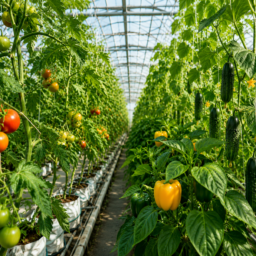
Modern farming is no longer only about supplying plants with nitrogen, phosphorus and potassium. Farmers are increasingly looking at how crops can remain productive when they face heat, drought, salinity, disease pressure, nutrient imbalance and other environmental stresses.
This is where silicon-based crop nutrition has attracted attention.
Potassium silicate fertilizer is particularly interesting because it combines two important components: potassium and soluble silicon. Potassium has well-established roles in water regulation, enzyme activity, photosynthesis and plant development, while silicon can contribute to stronger plant tissues and improved tolerance to several biotic and abiotic stresses.
But there is an important point that growers should understand:
Not every crop responds to silicon in exactly the same way.
Some crops are naturally stronger silicon accumulators, while others may show a more modest response. Soil conditions, crop variety, silicon availability, application method and environmental stress can all influence the outcome.
Research and agricultural extension literature particularly identify rice and sugarcane as crops with well-known responses to silicon nutrition. Other crops, including wheat and cucurbits such as cucumber and pumpkin, may also benefit, particularly where disease or environmental stress is a concern.
So, which crops deserve the most attention?
Let’s look at four important examples.
What Makes a Crop Responsive to Potassium Silicate?
Before discussing individual crops, it helps to understand what “responsive” actually means.
A responsive crop is not necessarily a crop that will automatically produce a larger harvest after every application. Rather, it is a crop in which adequate silicon and potassium nutrition may contribute to measurable improvements in areas such as:
- Plant structural strength
- Stress tolerance
- Disease resistance
- Water-use efficiency
- Nutrient utilisation
- Lodging resistance
- Crop quality
- Yield stability under stress
Silicon is considered a beneficial or functional nutrient rather than an essential nutrient for most plants. However, many crops can take up substantial quantities of silicon, particularly grasses and other monocots.
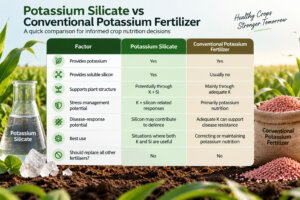
That distinction matters because potassium silicate should be treated as part of a balanced crop nutrition programme, not as a universal replacement for conventional fertilisers.
1. Rice – One of the Strongest Candidates for Silicon Nutrition
Rice is one of the most widely recognised crops for silicon nutrition.
As a grass, rice has a strong ability to accumulate silicon. This makes it particularly interesting for growers looking to use soluble silicon sources as part of crop management.
Why does rice respond well?
Rice can take up considerable amounts of silicon from the growing environment. Once absorbed, silicon can become deposited in plant tissues and contribute to stronger structural characteristics.
This can be valuable in a crop where plant architecture, stem strength and environmental stress can influence final performance.
Adequate potassium also plays an important role in plant water regulation and stress response. Potassium deficiency, for example, can contribute to weaker stems and greater vulnerability to environmental stress.
How can potassium silicate support rice?
A suitable potassium silicate programme may help support:
- Stronger stems and plant structure
- Better tolerance to environmental stress
- More effective utilisation of potassium
- Improved plant defence responses
- Reduced susceptibility to certain disease pressures
- Better crop stability under challenging conditions
Silicon nutrition has been associated with suppression of certain diseases in crops, although the effect depends on the crop, pathogen, environment and application strategy.
When should growers consider silicon nutrition in rice?
The answer depends on the formulation and application method.
Instead of following a generic calendar, growers should consider:
- Soil or growing-medium silicon availability
- Existing potassium status
- Crop variety
- Growth stage
- Water management
- Local disease pressure
- Product concentration and application instructions
This is especially important because the correct rate for one formulation cannot automatically be transferred to another.
Why is rice considered a high-potential crop?
Rice is a strong candidate because it naturally accumulates silicon and has a documented relationship with silicon nutrition.
For growers looking at crops where silicon has a particularly strong agronomic rationale, rice belongs near the top of the list.
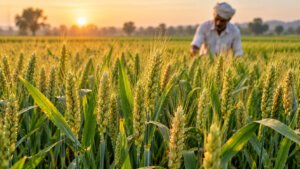
2. Sugarcane – Strong Structural and Stress-Management Potential
Sugarcane is another crop frequently associated with silicon nutrition.
Like rice, sugarcane is a grass and can accumulate substantial amounts of silicon. Research and agricultural extension guidance have reported beneficial responses to silicon amendments in sugarcane, including potential improvements in yield and stress-related performance under appropriate conditions.
Why is sugarcane a good candidate?
Sugarcane has a long growing cycle and develops a substantial amount of plant biomass.
During that period, the crop can encounter:
- Heat
- Drought
- Salinity
- Pest pressure
- Disease pressure
- Nutrient imbalance
- Wind and lodging-related problems
Plant structural strength therefore becomes an important consideration.
Silicon can accumulate in plant tissues and contribute to mechanical strength, while potassium has important functions in water regulation and overall plant physiology.
How can potassium silicate help sugarcane?
A properly managed silicon and potassium nutrition programme may support:
Stronger stalk development
Stronger plant tissues can be valuable for maintaining crop architecture throughout the growing season.
Stress tolerance
Silicon nutrition has been associated with improved tolerance to several environmental stresses, including drought, salinity and temperature-related stress.
Disease defence
Silicon may contribute to both physical and biochemical defence mechanisms within plants.
Yield stability
The goal should not simply be “more yield.” A more practical objective is maintaining healthy crop development and productivity when growing conditions become less favourable.
When should potassium silicate be used in sugarcane?
Timing should be based on the product formulation and agronomic programme.
Growers should evaluate:
- Soil test results
- Potassium availability
- Silicon availability
- Crop age
- Irrigation conditions
- Expected environmental stress
- Product compatibility
Avoid treating potassium silicate as a standalone solution. It works best when integrated with appropriate irrigation, soil fertility, pest management and other crop-management practices.
Why is sugarcane particularly interesting?
Sugarcane is among the crops for which silicon nutrition has some of the clearest practical agricultural relevance. University extension guidance notes that silicon amendments can potentially improve cane and sugar yields and support ratoon performance under appropriate conditions.
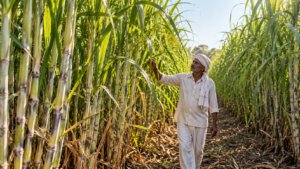
3. Wheat – Silicon for Stronger Plants and Stress Tolerance
Wheat is another important crop to consider when discussing silicon nutrition.
Research cited by Rutgers identifies wheat among crops that may benefit from supplemental silicon, particularly in relation to disease suppression and crop performance.
Why can wheat benefit from silicon?
Wheat is a grass and can accumulate significant amounts of silicon.
One of the practical concerns in cereal production is lodging when stems bend or fall over before harvest.
Lodging can interfere with harvesting and may reduce crop performance.
Potassium nutrition is already known to contribute to stalk strength and plant resistance to environmental stress. Silicon can add another layer of structural and defence-related support.
How does potassium silicate support wheat?
Potential benefits include:
- Stronger plant structure
- Improved resistance to lodging
- Support against certain fungal diseases
- Better tolerance to environmental stress
- Improved crop resilience
- Support for stable grain production
Silicon has been studied particularly in relation to diseases such as powdery mildew in wheat. Rutgers research notes that increased silicon nutrition can suppress or delay certain diseases in susceptible crops.
When is silicon particularly useful in wheat?
Silicon nutrition can be particularly interesting when the crop is expected to experience environmental or disease pressure.
For example:
- Drought-prone growing conditions
- Poor silicon availability
- High disease pressure
- Weak crop architecture
- Soil conditions that contribute to nutrient stress
However, application decisions should always be based on crop requirements and product-specific recommendations.
Why should wheat growers pay attention?
Wheat provides a good example of why silicon should not be viewed simply as another fertiliser ingredient.
The objective is not necessarily to force plant growth. Instead, silicon nutrition can be used strategically to help the plant maintain structural integrity and defence capacity.
4. Cucumber – A High-Value Horticultural Crop Worth Considering
Cucumber represents an important difference from rice, sugarcane and wheat.
It belongs to the cucurbit group, and research has identified cucurbits as a crop group that may respond positively to silicon nutrition. Rutgers specifically lists cucumber and pumpkin among crops where supplemental silicon can provide benefits under certain conditions.
Why is cucumber interesting?
Cucumber plants can be affected by:
- Powdery mildew
- Environmental stress
- Heat
- Water fluctuations
- Nutrient imbalance
- Pest pressure
Silicon has been studied for its role in strengthening plant tissues and supporting defence responses.
This does not mean potassium silicate should be considered a cure for fungal disease. Rather, adequate silicon nutrition may help the plant develop stronger physical and biochemical defence mechanisms.
How can potassium silicate support cucumber plants?
Potential benefits include:
Improved plant structure
Silicon can contribute to stronger plant tissues.
Stress tolerance
Silicon nutrition has been associated with improved responses to drought, salinity and temperature stress in various crops.
Disease-response support
Silicon has been investigated for suppressing diseases such as powdery mildew in susceptible crops.
Crop quality
Maintaining healthier foliage and plant structure can help support productive crop development.
When should potassium silicate be applied to cucumber?
Cucumber is also a good example of why application technique matters.
Potassium silicate products may be used through different crop nutrition systems, depending on the formulation. Soluble silicates can be used in suitable irrigation or foliar programmes, but the concentration, water quality, compatibility and application timing need to be controlled carefully.
Growers should always follow the manufacturer’s technical instructions.
Why should growers avoid over-application?
More fertilizer does not automatically mean better crop performance.
An excessive concentration can create compatibility or plant-sensitivity problems. Some plants can be sensitive to concentrated silicate solutions, especially under hot or stressful conditions. Product labels and crop-specific guidance should therefore take priority.

Potassium Silicate for Plants: What Actually Makes the Difference?
The biggest mistake in discussing silicon fertilization is treating the product as if it works identically in every field.
It doesn’t.
The crop response depends on several variables.
1. Crop Species
Rice and sugarcane are particularly recognised for silicon accumulation and response. Wheat and cucurbits can also benefit under suitable conditions.
2. Soil Silicon Availability
A soil may contain large amounts of silicon without necessarily supplying it to plants in an immediately available form.
Plant-available silicon chemistry is therefore more important than simply measuring total silicon.
3. Potassium Status
Potassium silicate provides both potassium and silicon, but the plant’s total potassium requirement still needs to be managed as part of the complete fertilisation programme.
4. Application Method
Soluble silicates can be incorporated into suitable agricultural application systems, including foliar and root-zone approaches depending on formulation and crop.
Rutgers notes that soluble potassium and sodium silicates are commonly used in horticultural or greenhouse applications, while soil delivery can provide a continuing source of silicon to roots.
5. Environmental Stress
The potential value of silicon can become more noticeable when plants experience stress.
These conditions can include:
- Drought
- Salinity
- Heat
- Disease pressure
- Nutrient imbalance
However, silicon should be considered a supportive crop-management tool, not a guarantee against environmental damage.
Potassium Silicate Fertilizer vs Conventional Potassium Sources
How to Choose the Right Potassium Silicate Liquid Fertilizer
When evaluating a commercial product, don’t judge it only by the words “liquid silicon fertilizer” on the label.
Look at the technical details.
Check the Silicon Content
Understand how much plant-available silicon the formulation provides.
Check the Potassium Content
Since potassium silicate also supplies potassium, the contribution should be incorporated into the overall nutrient-management programme.
Evaluate Solubility
A consistent soluble formulation is particularly important for fertigation and other precision applications.
Check Compatibility
Silicate solutions can have compatibility limitations with certain fertilisers and crop-protection products.
Always check compatibility before tank mixing.
Consider Water Quality
Water chemistry can influence nutrient solutions and application performance.
Follow Crop-Specific Recommendations
A rate suitable for one crop should not automatically be applied to another.
How, When and Why to Use Potassium Silicate in Crop Production
These three questions are more useful than simply asking whether silicon is “good” for plants.
How?
Use a suitable potassium silicate formulation through an application method appropriate for the crop and product.
Depending on the formulation and farming system, this may include:
- Soil application
- Fertigation
- Irrigation systems
- Foliar application
- Hydroponic nutrient systems
The manufacturer’s technical instructions should determine the actual concentration and compatibility requirements.
When?
There is no universal application date.
The ideal timing depends on:
- Crop stage
- Product formulation
- Application method
- Soil condition
- Disease pressure
- Environmental stress
- Nutrient status
Why?
The reason for using potassium silicate should be clearly defined.
It may be to support:
- Silicon nutrition
- Potassium nutrition
- Plant structural strength
- Stress tolerance
- Disease-management strategy
- Crop quality
- Yield stability
This goal-oriented approach is more useful than applying the product simply because it is marketed as a “plant booster.”
Crop Responsiveness at a Glance
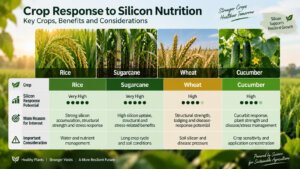
A Simple Way to Think About Crop Response
Think of potassium silicate as a support system rather than a magic input.
When the crop already has good nutrition, adequate water and favourable growing conditions, the response may be relatively modest.
When the crop is exposed to certain stresses and silicon availability is limiting, the value of silicon nutrition may become more noticeable.
That is why soil testing, crop observation and proper application planning matter.
Why Noble Alchem for Potassium Silicate Solutions?
For commercial agricultural applications, product consistency and technical support are just as important as the basic chemical name.
Noble Alchem has been manufacturing silicates and titanates since 1986 and produces potassium silicates in different forms, including liquid, powder and glass. The company operates manufacturing facilities in India and supplies silicate products for domestic and international markets.
Noble Alchem’s agricultural portfolio includes potassium silicate products intended for agriculture applications. Its product information highlights applications across vine crops, row crops, ornamental plants and hydroponic systems.
For commercial buyers, the right approach is to discuss the required grade, concentration, application system and technical specification rather than selecting a product based solely on generic fertilizer claims.
Frequently Asked Questions
1. Which crops respond best to potassium silicate fertilizer?
Rice and sugarcane are among the best-known crops for responding to silicon nutrition because they can accumulate relatively high levels of silicon. Wheat and cucurbits such as cucumber and pumpkin are also recognised as potential beneficiaries. The actual response depends on soil conditions, crop variety, silicon availability, application method and environmental stress.
2. How does potassium silicate liquid fertilizer help plants?
Potassium silicate supplies potassium and soluble silicon. Potassium supports important physiological functions such as water regulation and plant development, while silicon can contribute to stronger plant tissues and defence responses. Research has associated silicon nutrition with improved tolerance to some environmental stresses and suppression of certain plant diseases.
3. When should potassium silicate be applied to crops?
There is no single application schedule suitable for every crop. Timing depends on the crop’s growth stage, formulation, application method, soil conditions, nutrient status and expected stress. Growers should follow the product manufacturer’s technical recommendations and use crop-specific agronomic guidance rather than applying one standard rate across different crops.
4. Is potassium silicate safe for all plants?
Potassium silicate can be used across many agricultural and horticultural systems, but that does not mean every crop tolerates the same concentration or application method. Some plants can be sensitive to concentrated silicate applications, and compatibility with other agricultural inputs must also be considered. Always follow the product label and conduct compatibility or small-area testing where appropriate.
5. Can potassium silicate replace regular potassium fertilizer?
Not necessarily. Potassium silicate provides potassium as well as silicon, but whether it can supply enough potassium for a particular crop depends on the product concentration and the crop’s nutrient requirement. Potassium silicate should therefore be incorporated into a complete nutrient-management programme rather than automatically replacing conventional potassium fertilisers. Potassium deficiency and overall soil fertility should be evaluated separately.