
Industrial floors go through more stress than most people realize. From forklift traffic and rolling loads to dust, moisture, and daily operational pressure, concrete surfaces continuously face wear. Initially, the damage may seem minor. But over time, businesses begin noticing surface dust, dullness, tire marks, and rising maintenance costs.
The challenge is simple: untreated concrete weakens gradually from the surface. That’s why modern warehouses and industrial facilities are now moving toward advanced concrete densification applications, a smarter approach that strengthens the floor internally instead of simply coating the top layer.
Why Floor Strength Matters in Industrial Spaces
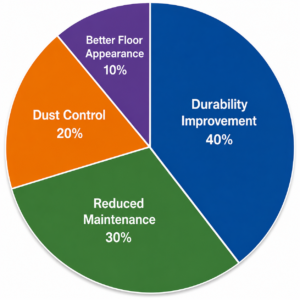
In warehouses and factories, flooring directly affects operations. Weak concrete surfaces create continuous dust, require frequent repairs, and wear down faster under heavy movement. These problems not only affect maintenance budgets but also disrupt operational efficiency.
This is where modern densification systems make a major difference.
A high-performance Lithium silicate densifier penetrates deep into the concrete and chemically strengthens the internal structure. Instead of creating a temporary surface film, it improves the concrete itself. The result is a floor that feels harder, cleaner, and more durable over time.
How Densification Improves Daily Operations
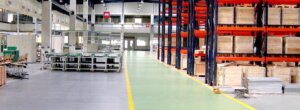
One of the biggest problems in industrial spaces is dust generation. Concrete dust settles on machinery, affects inventory, and increases cleaning efforts. In high-traffic facilities, untreated floors also begin showing abrasion marks and uneven wear. Densified floors help reduce these issues significantly by stabilizing the surface internally.
To further improve protection, many facilities also use a lithium silicate concrete sealer that helps reduce moisture penetration and improves surface durability.
This combination creates floors that are easier to maintain and better suited for demanding industrial environments.
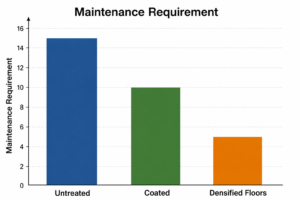
Performance Comparison
| Property | Untreated Concrete | Densified Concrete |
|---|---|---|
| Dust Formation | High | Minimal |
| Surface Hardness | Moderate | High |
| Maintenance Requirement | Frequent | Reduced |
| Long-Term Durability | Average | Strong |
Why Modern Industries Prefer Lithium-Based Systems
Modern industries are shifting toward lithium-based systems because they offer deeper penetration, better consistency, and long-term floor performance. Unlike temporary coatings that may peel or wear away, densification strengthens the floor from within, making it a more reliable long-term investment for warehouses, factories, and commercial facilities.
Frequently Asked Questions
What is concrete densification?
- Concrete densification is a process that strengthens concrete internally, improving hardness and reducing dust formation.
Why do industrial floors generate dust?
- Untreated concrete gradually breaks down under heavy traffic, creating surface dust and wear.
How does densification improve floor durability?
- It chemically reacts inside the concrete to create a denser and stronger surface structure.
Why are lithium-based systems preferred today?
- They provide better penetration, consistent hardening, and improved long-term performance.
How does a concrete sealer help industrial flooring?
- It helps protect the floor against moisture, stains, and industrial wear while improving surface longevity.