
Most warehouse owners don’t think about their floors until problems start affecting operations.
A forklift wheel starts leaving marks. Dust keeps settling on inventory. Small cracks begin appearing near loading zones. Workers complain about uneven surfaces. Cleaning costs increase every month. And suddenly, the floor becomes an operational problem instead of just a surface to walk on. This is exactly why modern warehouses are changing the way they treat concrete floors.
Instead of repeatedly repairing damaged concrete or applying short-term coatings, many facilities are now investing in long-term floor strengthening systems that actually solve the root problem weak and porous concrete.
The Real Problem With Traditional Warehouse floors
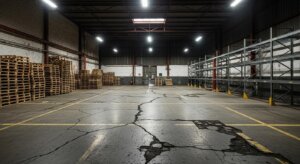
Most warehouse floors fail slowly. Not because the concrete was bad from day one but because untreated concrete naturally absorbs pressure, moisture, friction, and chemical exposure over time.
Here’s what usually happens:
1. Constant Forklift Pressure Weakens the Surface
Heavy forklift movement creates micro-abrasions every single day. Initially invisible, these slowly break down the top concrete layer.
2. Dust Starts Becoming a Daily Problem
Concrete dust is more than a cleaning issue:
- It affects stored products
- Damages machinery
- Reduces indoor air quality
- Increases maintenance costs
In logistics warehouses, dust can even interfere with barcode scanners, packaging systems, and automated equipment.
3. Coatings Begin Peeling
Traditional epoxy or acrylic coatings may initially look attractive, but many warehouses discover the same issue after months:
- peeling,
- tire marks,
- patchy surfaces,
- repeated maintenance shutdowns.
This is where many businesses realize they need a more permanent flooring solution.
Why Warehouses Are Moving Toward Densification Instead of Surface Coatings
Modern warehouse operators are now asking a different question:
“How do we strengthen the concrete itself instead of just covering it?” That shift in thinking is the reason advanced floor densification systems are growing rapidly in industrial spaces.
Unlike surface coatings, a Lithium silicate densifier works inside the concrete.
It penetrates deep into the slab and reacts chemically with free lime present within the concrete structure. This creates a denser internal matrix that improves:
- hardness,
- wear resistance,
- dust control,
- and floor lifespan.
Instead of sitting on top of the floor, the treatment becomes part of the floor itself.
How Lithium-Based Systems Solve Real Warehouse Problems
Problem: Forklift Tire Damage
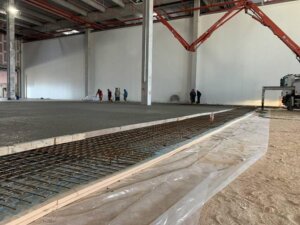
Warehouse managers often notice:
- black tire marks,
- wheel abrasion,
- surface powdering,
- and traffic lane deterioration.
Densified concrete significantly improves abrasion resistance, helping floors handle repeated traffic more effectively.
Problem: High Cleaning Costs
Warehouses with untreated concrete usually spend more on:
- sweeping,
- industrial vacuuming,
- floor repairs,
- and maintenance labor.
A hardened floor creates less surface dust, which means:
- cleaner inventory,
- lower cleaning frequency,
- and reduced operational disruption.
Problem: Frequent Repairs
Temporary patchwork repairs become expensive over time.
Many warehouse owners don’t realize how much money they lose due to:
- shutdown time,
- repair labor,
- coating replacement,
- and operational delays.
A properly treated floor reduces long-term repair cycles dramatically.
How Concrete Sealers Add Another Layer of Protection
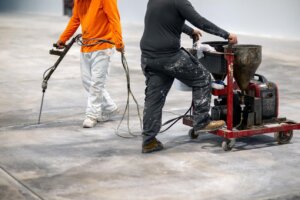
Warehouse floors are exposed to:
- oil spills,
- moisture,
- chemicals,
- and continuous cleaning.
A high-quality Lithium silicate concrete sealer helps reduce liquid absorption while improving surface protection and cleanability.
This becomes especially useful in:
- logistics hubs,
- food storage facilities,
- manufacturing units,
- and high-traffic industrial warehouses.
- The Shift Toward Long-Term Thinking
One major reason industrial flooring strategies are changing is simple:
Businesses no longer want flooring that only “looks good.”
They want flooring that:
- lasts longer,
- reduces operational downtime,
- lowers maintenance budgets,
- and supports business efficiency.
Warehouse flooring is no longer treated as a cosmetic investment. It’s now viewed as an operational asset.
Why Product Quality Matters More Than Marketing Claims
Not all floor hardening products perform the same way.
Low-grade formulations may:
- react inconsistently,
- leave residue,
- fail under heavy traffic,
- or deliver uneven hardening.
Frequently Asked Questions
1. Why do warehouse floors generate dust over time?
Concrete naturally becomes porous and weakens under heavy traffic. This causes surface particles to break apart, creating continuous dust formation.
2. How do lithium-based floor hardeners improve warehouse flooring?
They strengthen the concrete internally, improving hardness, reducing abrasion, and minimizing dust generation.
3. Why are traditional coatings failing in many warehouses?
Surface coatings can peel, scratch, or wear out under constant forklift traffic and industrial movement.
4. How does densified flooring reduce maintenance costs?
It reduces dusting, surface wear, and repair frequency, helping warehouses lower cleaning and maintenance expenses.
5. When should a warehouse upgrade its flooring system?
If the floor shows cracking, powdering, tire marks, dust buildup, or frequent repair requirements, it’s usually time for an upgrade.
6. How does a concrete sealer help warehouse operations?
It protects floors from moisture, chemicals, stains, and industrial wear while improving floor cleanability.
7. Why is floor durability important in logistics operations?
Warehouse operations depend heavily on uninterrupted movement. Durable flooring reduces downtime, improves safety, and supports smoother logistics performance.