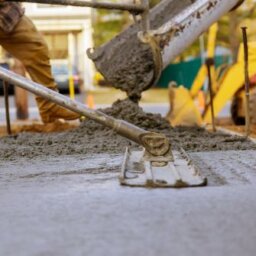
Concrete floors are widely used in warehouses, factories, commercial buildings, and parking structures because of their durability and load-bearing capacity. However, untreated concrete can still face issues like surface dusting, abrasion, and gradual wear over time.
This is where a densifier for concrete floors becomes important. Concrete densifiers are chemical treatments that strengthen the surface of concrete by increasing its density and hardness. When applied correctly, they significantly improve floor durability, abrasion resistance, and long-term performance.
In this guide, we explain how concrete densifiers work, why they improve floor strength, and where they are commonly used.
What Is a Concrete Floor Densifier?
A concrete densifier is a liquid chemical compound usually made from lithium, sodium, or potassium silicate. When applied to a concrete surface, the densifier penetrates the pores of the concrete and reacts with free lime (calcium hydroxide) present in the concrete.
This reaction forms calcium silicate hydrate (CSH), which is the same compound responsible for concrete strength.
As a result:
- The concrete surface becomes harder and denser
- The pores in the concrete reduce
- Dusting and wear decrease significantly
According to industry flooring studies, densified concrete floors can improve surface hardness by up to 30–40% compared to untreated concrete.
Why Concrete Floors Lose Strength Over Time
Even though concrete is strong, its surface contains microscopic pores and capillaries. These pores allow:
- Dust formation
- Moisture penetration
- Surface wear from heavy traffic
In industrial environments such as warehouses and manufacturing plants, forklifts, machinery, and constant movement can gradually weaken the floor surface.
A densifier for concrete floors helps solve this problem by filling the pores and strengthening the concrete structure from within.
How Concrete Densifiers Strengthen Concrete Floors
Chemical Reaction That Increases Density
When the densifier penetrates the concrete, it reacts with calcium hydroxide and forms additional calcium silicate hydrate (CSH).
This reaction leads to:
- Increased surface hardness
- Reduced porosity
- Improved resistance to abrasion
In simple terms, the densifier converts weak compounds into stronger compounds inside the concrete.
Improved Abrasion Resistance
Industrial floors are constantly exposed to mechanical wear from wheels, equipment, and foot traffic.
Studies on polished concrete flooring show that densified concrete can improve abrasion resistance by nearly 25–50%, depending on the densifier type and application method.
This makes densifiers highly suitable for:
- Warehouses
- Logistics centers
- Manufacturing plants
- Retail spaces
- Commercial buildings
Reduced Concrete Dusting
One common problem with untreated concrete floors is dusting, where fine powder forms on the surface due to weak cement particles.
Densifiers chemically bind these particles and eliminate surface dust formation.
This is especially important in industries such as:
- Food processing
- Pharmaceutical manufacturing
- Electronics production
Where dust control is essential for hygiene and safety.
Performance Comparison: Untreated vs Densified Concrete
| Feature | Untreated Concrete Floor | Densified Concrete Floor |
| Surface Hardness | Moderate | High |
| Dust Formation | High | Very Low |
| Abrasion Resistance | Medium | High |
| Maintenance Cost | Higher over time | Lower long-term |
| Floor Lifespan | Standard | Extended lifespan |
Where Concrete Densifiers Are Commonly Used
Because of their durability benefits, densifiers are widely used in:
Industrial Warehouses
Heavy forklifts and pallet movement require strong abrasion-resistant floors.
Manufacturing Plants
Machinery vibration and heavy loads demand stronger surfaces.
Commercial Buildings
Densified floors improve longevity while reducing maintenance.
Parking Structures
Improved wear resistance helps withstand vehicle traffic.
Retail and Shopping Centers
Densified polished concrete floors are durable and visually appealing.
Types of Concrete Densifiers
There are three commonly used types of densifiers.
Lithium Silicate Densifiers
- Fast reacting
- Deep penetration
- Ideal for polished concrete
Sodium Silicate Densifiers
- Traditional densifier type
- Cost-effective
- Suitable for large projects
Potassium Silicate Densifiers
- Good penetration
- Often used for industrial flooring
Each type has different characteristics depending on project requirements and floor conditions.
Benefits of Using a Densifier for Concrete Floors
Using a densifier offers several long-term advantages:
- Increased concrete surface hardness
- Improved abrasion resistance
- Reduced dust formation
- Lower maintenance costs
- Extended floor lifespan
- Better performance for polished concrete floors
These benefits make densifiers an important solution for modern industrial flooring systems.
Choose the Right Densifier for Concrete Floors
Selecting the right product is important for achieving maximum floor performance. Factors such as concrete condition, traffic load, and application method should be carefully evaluated.
At Noble Alchem, we provide advanced solutions designed to enhance the durability and performance of concrete surfaces.
If you are looking for a high-performance densifier for concrete floors, our team can help you choose the right solution for industrial, commercial, and warehouse flooring applications.
Contact Noble Alchem to learn how our concrete treatment solutions can help you build stronger and longer-lasting floors.
FAQs
1. What does a concrete densifier do?
A concrete densifier strengthens the surface of concrete by reacting with free lime to form calcium silicate hydrate, which increases hardness and durability.
2. How much stronger does concrete become after densification?
Surface hardness can improve by around 30–40%, depending on the densifier type and application.
3. Can densifiers reduce concrete dusting?
Yes. Densifiers chemically bind loose cement particles, which significantly reduces or eliminates dust formation.
4. When should a densifier be applied to concrete floors?
Densifiers are usually applied after the concrete has cured, typically within 7–28 days, depending on the flooring system.
5. Are concrete densifiers suitable for warehouses?
Yes. Warehouses often use densifiers to improve abrasion resistance and reduce wear caused by forklifts and heavy traffic.
6. What is the difference between a concrete densifier and a sealer?
A densifier strengthens the internal structure of concrete, while a sealer mainly protects the surface from moisture and stains.
7. Can densifiers be used for polished concrete floors?
Yes. Densifiers are an essential part of polished concrete systems because they increase hardness and improve polishing results.