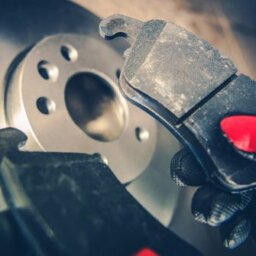
Why Material Selection Matters in Brake Pads
Friction materials are at the core of modern braking systems. Every time a vehicle slows down or stops, brake pads convert kinetic energy into heat through friction. This process generates high temperatures, continuous wear, and mechanical stress, making material selection critical for performance, safety, and durability.
To meet these demands, manufacturers increasingly rely on advanced functional materials that can withstand heat, reduce wear, and maintain stable friction. One such material is potassium titanate, which has become an important component in modern brake pad materials and friction formulations.
This article explains how potassium titanate is used in friction materials, its performance benefits, and why it plays a growing role in today’s automotive braking systems.
What Is Potassium Titanate?
Potassium titanate is an inorganic ceramic material known for its high thermal stability, chemical resistance, and reinforcing properties. It is commonly supplied as a fine powder or whisker-type structure, making it suitable for blending into friction formulations.
Key Material Properties
- High heat resistance, suitable for braking temperatures
- Excellent chemical stability under friction conditions
- Reinforcing behavior that improves mechanical strength
- Good compatibility with resins and other fillers
These characteristics make potassium titanate a reliable high-temperature filler in demanding braking environments.
Why Potassium Titanate Is Used in Friction Materials
Thermal Stability at Elevated Temperatures
Brake pads can experience operating temperatures between 200°C and 500°C, with short-term peaks even higher during heavy braking. Potassium titanate maintains structural stability within this range, helping friction materials resist thermal degradation.
Improved Wear Resistance
As a wear-resistant additive, potassium titanate helps reduce abrasive wear on both brake pads and rotors. Industry studies suggest that well-optimized formulations can achieve wear rates 10–20% lower than those of conventional mineral fillers.
Stable Friction Performance
Consistent friction is essential for predictable braking. Potassium titanate contributes to stable friction coefficients, reducing sudden changes during high-speed or repeated braking cycles.
Noise and Vibration Control
Brake noise and vibration are ongoing challenges. The microstructure of potassium titanate helps dampen vibrations, supporting quieter braking performance in automotive and industrial applications.
Key Applications in Brake Pads
Passenger Vehicle Brake Pads
In passenger cars, potassium titanate is used to balance comfort, durability, and safety. It supports smooth braking, reduced noise, and consistent performance under everyday driving conditions.
Commercial Vehicle Braking Systems
Heavy-duty trucks and buses operate under higher loads and temperatures. Potassium titanate improves thermal resistance and wear life, making it suitable for commercial brake pad materials.
Industrial Braking Systems
Industrial machinery often requires braking systems capable of handling continuous stress. Potassium titanate enhances durability in industrial friction materials where reliability is critical.
High-Performance and Heavy-Duty Applications
In performance-focused braking systems, such as racing or specialized industrial equipment, potassium titanate supports high-temperature stability and controlled wear, contributing to reliable braking under extreme conditions.
Performance Benefits Backed by Industry Data
While exact performance depends on formulation and processing, industry-average data shows:
- Operating temperature resistance: Stable up to ~800°C in ceramic form
- Wear reduction: Approximately 10–20% compared to basic mineral fillers
- Friction stability: Improved consistency over repeated braking cycles
Compared to traditional fillers, potassium titanate offers a more balanced combination of heat resistance, wear control, and durability, without relying on hazardous materials.
Comparison of Common Fillers Used in Brake Pads
| Parameter | Potassium Titanate | Asbestos (Historical) | Glass Fiber | Wollastonite |
| Heat Resistance | High | Moderate | High | Moderate |
| Wear Resistance | High | Moderate | Moderate | Moderate |
| Safety | Safe when handled properly | Hazardous | Safe | Safe |
| Durability | High | Low–Moderate | Moderate | Moderate |
| Regulatory Acceptance | Fully compliant | Restricted/Banned | Compliant | Compliant |
Role of Potassium Titanate in Modern & Eco-Friendly Brake Pads
With the global shift toward non-asbestos friction materials, potassium titanate has gained importance as a safer and more sustainable option. It supports compliance with modern automotive regulations while maintaining performance.
Industry Trends Driving Adoption
- Increased focus on environmentally safer brake materials
- Demand for longer brake life and reduced particulate emissions
- Preference for non-asbestos formulations in global markets
Potassium titanate aligns well with these trends, making it a practical choice for next-generation braking systems.
Why Manufacturers Choose High-Purity Potassium Titanate
Importance of Consistent Quality
For friction materials, consistency is critical. Variations in purity or particle size can affect braking performance. High-purity potassium titanate ensures predictable behavior and repeatable results.
Particle Size and Morphology
Controlled particle size and morphology enhance dispersion in brake pad formulations, resulting in uniform friction and wear characteristics.
At Noble Alchem, material quality and technical consistency are key focus areas, supporting manufacturers who require reliable performance in friction material applications.
Conclusion: The Value of Potassium Titanate in Friction Performance
Potassium titanate has become an important material in modern brake pad materials and friction systems. Its ability to withstand high temperatures, reduce wear, stabilize friction, and support safer formulations makes it a valuable component across automotive, commercial, and industrial applications.
As braking systems continue to evolve, thoughtful material selection will remain essential. Potassium titanate offers a balanced solution that meets performance demands while supporting regulatory and sustainability goals.
Frequently Asked Questions (FAQs)
1. Why is potassium titanate used in brake pads?
It improves heat resistance, wear performance, and friction stability in demanding braking conditions.
2. Is potassium titanate safe for automotive applications?
Yes, it is widely used in non-asbestos brake formulations and meets modern safety standards.
3. How does potassium titanate compare to asbestos?
Potassium titanate offers better safety and regulatory compliance while maintaining strong performance.
4. Does potassium titanate reduce brake wear?
Industry data suggests it can reduce wear by around 10–20% when properly formulated.
5. Is potassium titanate suitable for high-temperature braking systems?
Yes, it remains stable at the high temperatures commonly seen in braking applications.
6. Can potassium titanate be used in commercial vehicle brake pads?
Yes, it is commonly used in commercial and heavy-duty braking systems.
7. What makes high-purity potassium titanate important?
High purity and controlled particle size ensure consistent braking performance and durability.